

sir george newman
Early life and education
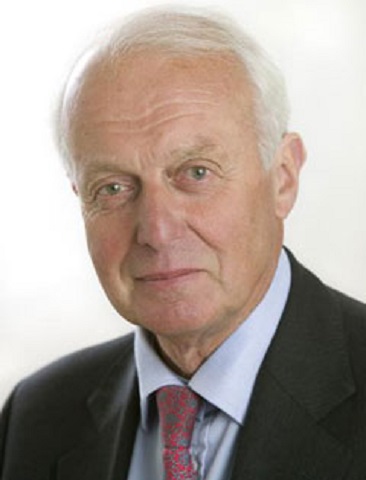
Sir George Newman was born on 4 July 1941 and educated at Lewes County Grammar School, a selective state school in Sussex. His schooling in a rigorous, academically focused environment prepared him for competitive university entrance and fostered an early interest in law and public affairs.
He went on to read Law at St Catharine’s College, Cambridge, between 1961 and 1964, where he distinguished himself by winning the Squire Law Scholarship. Cambridge training in the early 1960s combined strong doctrinal teaching with a growing exposure to comparative and international perspectives, giving Newman a foundation that later supported his wide‑ranging Commonwealth practice.
Call to the Bar and early practice
Newman was called to the Bar of England and Wales by Middle Temple in 1965, entering a profession that was still largely divided between specialist advocates and solicitors and heavily centred in London. As a young barrister he built his practice primarily in London, but from an early stage he also appeared in overseas courts, particularly in Commonwealth jurisdictions.
His early years at the Bar coincided with a period in which constitutional litigation and public law were becoming increasingly prominent in appellate courts and the Judicial Committee of the Privy Council. Newman gravitated towards this work and developed experience in commercial and constitutional cases, laying the groundwork for a career that would blend complex commercial disputes with high‑stakes constitutional advocacy.
Rise to Queen’s Counsel and leading Privy Council advocate
In 1981 Newman took silk, being appointed Queen’s Counsel, a mark reserved for barristers recognised for excellence in advocacy and legal expertise. By this time, he had already become involved in international commercial litigation and was emerging as a leading practitioner before the Privy Council, the final court of appeal for many Commonwealth states.
As a Privy Council advocate, he was instructed repeatedly in constitutional challenges and matters of constitutional settlement arising out of political crises and armed conflict, particularly in small or medium‑sized Commonwealth states. His reputation in this sphere rested not only on courtroom skill but also on his capacity to navigate the intersection of law and politics, advising governments, governors‑general and other constitutional actors in volatile situations.
Constitutional work in Fiji
One of the most significant chapters in Newman’s career was his involvement in Fiji following the coups of 1987. He first appeared in litigation in the aftermath of the initial coup, handling constitutional law issues before the courts and helping to clarify the scope of governmental power in a period of profound instability.
Between 1987 and 1990 Newman served as constitutional adviser to Fiji’s Governor‑General, who later became President, at a time when the country was transitioning from a monarchical to a republican form of government. During this period he assisted in drafting the interim constitution and associated legislation that established a republican government under a prime minister, designing a new institutional framework intended to stabilise the country and balance competing political claims.
Constitutional and crisis work in Trinidad and the wider Caribbean
Newman’s constitutional expertise was also sought in the Caribbean, notably in Trinidad and Tobago, where he acted and advised in court proceedings after an attempted coup. These cases involved complex questions about emergency powers, the legality of governmental responses and the restoration of constitutional order following violent unrest.
His broader appellate work took him to numerous Caribbean jurisdictions, including Jamaica, Trinidad and Tobago, Antigua, St Kitts and Bermuda, where he appeared in constitutional and public law cases before local courts and the Privy Council. Through these engagements he contributed to the development of constitutional jurisprudence across the region, helping to shape doctrines on rights protection, separation of powers and judicial review in post‑colonial states.
Commercial and arbitration practice
Alongside his public law and constitutional work, Newman developed a substantial commercial practice, appearing in major international disputes and arbitrations. His experience included the banking dispute that followed President Jimmy Carter’s freeze of Iranian bank assets in London, which raised difficult questions of sovereign immunity, public international law and the interaction between executive action and private commercial rights.
He also took part in the complex “Tin Council” litigation, arising from the collapse of the International Tin Council, which generated landmark cases on the liability of international organisations and the reach of English law in regulating them. As counsel in arbitrations he represented foreign governments such as the State of Qatar in a Gulf oil dispute and a separate arbitration concerning the security of Qatar’s border technology, as well as the People’s Republic of China in a commercial arbitration in Stockholm, and served as arbitrator in London, Singapore and Stockholm. This strand of his career demonstrated his facility with technically demanding financial, energy and technology disputes on an international stage.
Middle Temple and professional service
Within the English profession Newman remained closely connected to Middle Temple, the Inn that had called him to the Bar. He was elected a Bencher of Middle Temple in 1989, joining the governing body responsible for the Inn’s administration, education and discipline.
His service culminated in his appointment as Treasurer of Middle Temple in 2009, a chiefly honorary but symbolically significant role traditionally held by a senior judge or leading barrister. In this capacity he contributed to the Inn’s governance, cultivated its international links and supported training and mentoring for younger barristers, reflecting a commitment to maintaining professional standards and institutional continuity.
Transition to the judiciary: Recorder and Deputy High Court Judge
Newman’s judicial career began with part‑time appointments while he still practised at the Bar. In 1982 he was appointed a Recorder of the Crown Court for England and Wales, sitting as a part‑time judge in criminal cases and gaining hands‑on experience in trial management and sentencing.
He became a Deputy High Court Judge in 1989, hearing High Court cases on a part‑time basis, often in areas linked to his expertise in public law, human rights and complex civil litigation. These roles provided a transitional bridge from full‑time practice to the bench, and demonstrated the judiciary’s confidence in his judgment, temperament and legal knowledge.
High Court judge in the Queen’s Bench Division
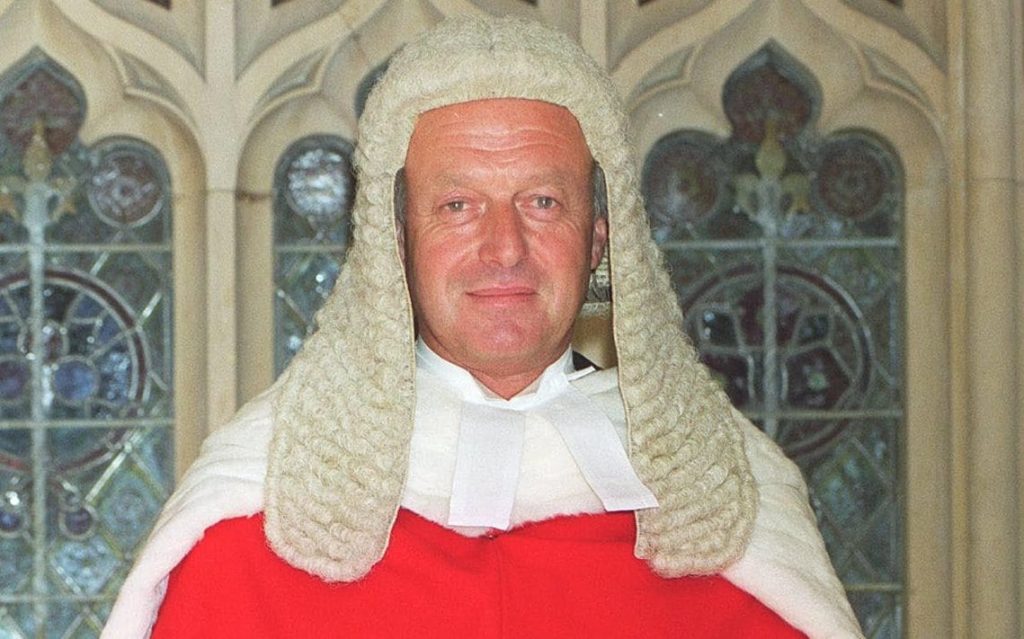
In 1995 Newman was appointed a Justice of the High Court, assigned to the Queen’s Bench Division, and was knighted on taking office, as is customary for High Court judges in England and Wales. On the High Court he dealt with a wide range of serious criminal cases, complex civil disputes and public law matters, including numerous judicial review applications and human‑rights‑related claims.
The Queen’s Bench Division in this period was increasingly engaged with human rights, particularly as the European Convention on Human Rights exerted growing influence before being incorporated domestically by the Human Rights Act 1998. Newman’s background in constitutional and comparative law positioned him to handle such cases, and he developed considerable experience in scrutinising executive action and balancing individual rights with public interests.
International judicial roles: Bahamas and Cayman Islands
After his retirement from the High Court of England and Wales in 2007, Newman continued his judicial work in overseas appellate courts. In 2009 he was appointed a non‑resident Judge of the Court of Appeal of the Bahamas, a position in which he sat for significant periods, particularly in 2010, dealing with appeals that included serious criminal cases and constitutional and human rights issues.
In 2013 he was appointed a Justice of the Court of Appeal of the Cayman Islands, and he was formally sworn in on 11 August 2014 by the Governor, Helen Kilpatrick. Cayman’s Chief Justice, Anthony Smellie, welcomed him by emphasising his extensive Commonwealth experience in both advocacy and judging, and his particular background in human‑rights‑related constitutional cases, which were becoming increasingly important in Cayman’s own legal landscape.
Oversight of surveillance and security vetting
Parallel to his judicial appointments, Newman took on key roles in the oversight of security and surveillance in the United Kingdom, reflecting a trust in his independence and judgment. In 2009 he was appointed Chair of the Security Vetting Appeals Panel, based in the Cabinet Office, hearing appeals by civil servants and others who had been refused security clearance and whose careers could be significantly affected by such decisions.
On 1 January 2010 the Prime Minister appointed him as a Surveillance Commissioner under the regime governing the oversight of covert surveillance and intrusive investigatory techniques by law enforcement and other public authorities. In this role he provided judicial scrutiny of operations involving serious crime and terrorism, with a mandate to ensure that they were not disproportionately or unnecessarily intrusive on privacy and human rights, and he was reappointed for a further three‑year term in January 2013.
Iraq fatality investigations and accountability
In January 2014 the Secretary of State for Defence appointed Newman to conduct individual fatality investigations into civilian deaths allegedly caused by British forces in Iraq in 2003. These investigations formed part of the United Kingdom’s wider response to allegations of wrongdoing and violations of international humanitarian law by its forces during the Iraq conflict.
As overall inspector for assigned Iraq fatality cases, Newman’s task was to examine evidence around particular incidents, assess the legality and proportionality of the actions taken, and report on findings that could have implications both for the individuals involved and for systemic military practices. Legal scholars have noted that this kind of judicially led inquiry reflects the judiciary’s evolving role in scrutinising state conduct in national security and armed conflict contexts, and Newman’s appointment highlighted his standing as an independent and experienced judge suitable for such sensitive work.
Human rights, judicial review and the rule of law
A consistent theme in Newman’s judicial and quasi‑judicial roles has been engagement with human rights and the rule of law, whether in domestic judicial review, Commonwealth constitutional appeals or oversight of surveillance and security vetting. On the High Court bench, he heard a wide range of judicial review cases and human‑rights‑related matters, which required evaluation of executive decisions against standards of legality, rationality and proportionality.
His later positions as Surveillance Commissioner and chair of the Security Vetting Appeals Panel extended this work into the security sphere, requiring him to balance national security concerns with individual rights to privacy, fair treatment and career prospects. In the Caribbean and Pacific, his constitutional work similarly revolved around embedding or restoring legal order in the aftermath of coups and political violence and ensuring that governmental power operated within constitutional limits.
Personal life and character
Newman’s professional biography also hints at the importance of his family life and civic engagement. His wife, Lady Hilary Newman, an Oxford graduate and educator, served as head of history at a major public school, sat as a magistrate for over twenty years and helped found a victim support scheme in East Sussex, as well as serving as a governor of two large schools in Kent.
Observers in Cayman noted that Newman expressed satisfaction at being able to continue contributing to the Commonwealth’s rule of law in his appellate roles, describing his career as a “continuous passage” through different jurisdictions. He himself remarked that he had “a wonderful career”, a modest summary that belied the breadth of his work across advocacy, judging and sensitive oversight functions in multiple countries.
Legacy and significance
By the time of his death on 10 June 2019, Sir George Newman had come to be seen as a judge who combined a classic English commercial and public law practice with an unusually international judicial and advisory career. His work in Fiji and Trinidad placed him at the heart of constitutional reconstruction after coups, while his appellate judging in the Bahamas and Cayman Islands contributed to the development of Caribbean jurisprudence on crime, constitutional law and human rights.
Within the United Kingdom, his High Court service, his oversight of surveillance and security vetting, and his role in Iraq fatality investigations reflected growing expectations that senior judges would scrutinise government action in areas once treated as largely non‑justiciable. Taken together, these strands of his career illustrate how a late‑twentieth‑century English barrister could evolve into a transnational judicial figure, carrying principles of the rule of law, constitutionalism and accountability across different legal systems while remaining rooted in the traditions of the English Bar and bench.